How to Test-Drive a Chinese EV in the US Without Getting Sold
Overseas trips, Canada shopping tourism, and gray-market pitches all feel like research. Here is a checklist so a fun drive does not become a title and insurance problem.

Who it’s for
You want to feel a BYD, MG, or other China-brand EV before you trust the internet. Sensible.
This guide is for US residents who might:
- test-drive while traveling overseas
- cross into Canada after reading trade / manufacturing headlines
- meet a gray-market seller who says “come drive it this weekend”
As of August 2026, Chinese-brand passenger EVs are generally not in authorized US retail. That means many “test drives” are either foreign-market experiences or nonstandard US pitches. FairRange’s goal: let you learn from the car without getting sold a compliance problem.
Stock photo — illustrative driving context, not a specific Chinese EV US retail experience. Photo: Unsplash.
Specs that matter vs marketing (what to measure on the drive)
Salespeople sell screens and acceleration. Commute buyers measure repeatable behavior. Bring a notes app and run the same script every time.
Before you move
| Checkpoint | What to record | Why |
|---|---|---|
| Exact model / market / year | VIN if available; build market (EU, CN, CA, etc.) | Firmware and equipment differ by market |
| Odometer and charge % | Starting state of charge | Range theater depends on start point |
| Tire brand / size / wear | Photos | Handling and efficiency hinge on tires |
| Drive mode defaults | Eco / Normal / Sport | Apple-to-apple comparisons |
On a 30–45 minute loop
Design a loop that matches your commute, not the seller’s favorite empty road:
- Urban crawl — throttle smoothness, brake regen harshness, HVAC noise at idle-equivalent speeds
- 40–55 mph arterial — wind/road noise; whether lane-keep nags constantly
- Highway merge — real-world acceleration with passengers or cargo if that is your life
- Parking — camera clarity at dusk; turning circle in a tight lot
- Charge stop (if possible) — can you initiate a charge without a specialist account? What cable/standard?
Score each 1–5. Ignore peak 0–60 claims unless you merge onto freeways daily.
Marketing claims to park for later
- CLTC / optimistic foreign cycle range
- “Cheaper than Tesla everywhere”
- “US launch imminent” without certification + dealer names
- “Everyone imports these fine”
USA Today’s Canada-related BYD trade reporting shows how loud North American headlines can get. Headlines are not a US FMVSS sticker.
US service reality (questions for sellers)
A test drive without a service interrogation is tourism. Ask out loud:
- Who performs warranty work? Legal entity name, not a brand slogan.
- Parts ETA for a front bumper cover and a windshield? Vague “we can get anything” fails.
- Which US shops have touched this VIN pattern? Ask for contacts you can call.
- What happens if the companion app stops working for US users? Connected features are not guaranteed forever — Commerce / BIS connected-vehicle ICTS scrutiny is part of the policy environment.
- Can you provide a sample bill of sale and title path for my state?
If the seller is overseas or in Canada, add:
- Who is the importer of record for a US entry?
- Which Registered Importer / conformity path applies? Point them at NHTSA’s importing-vehicle guidance and see if they can answer without hand-waving.
- What duties and fees are already modeled? USTR Section 301 EV modifications include a very large additional duty layer on electric vehicles in the mid-2020s review cycle — overseas MSRP math often collapses.
CBP processes goods at the border; “we drove it across for the weekend” is not a compliance strategy for keeping a car.
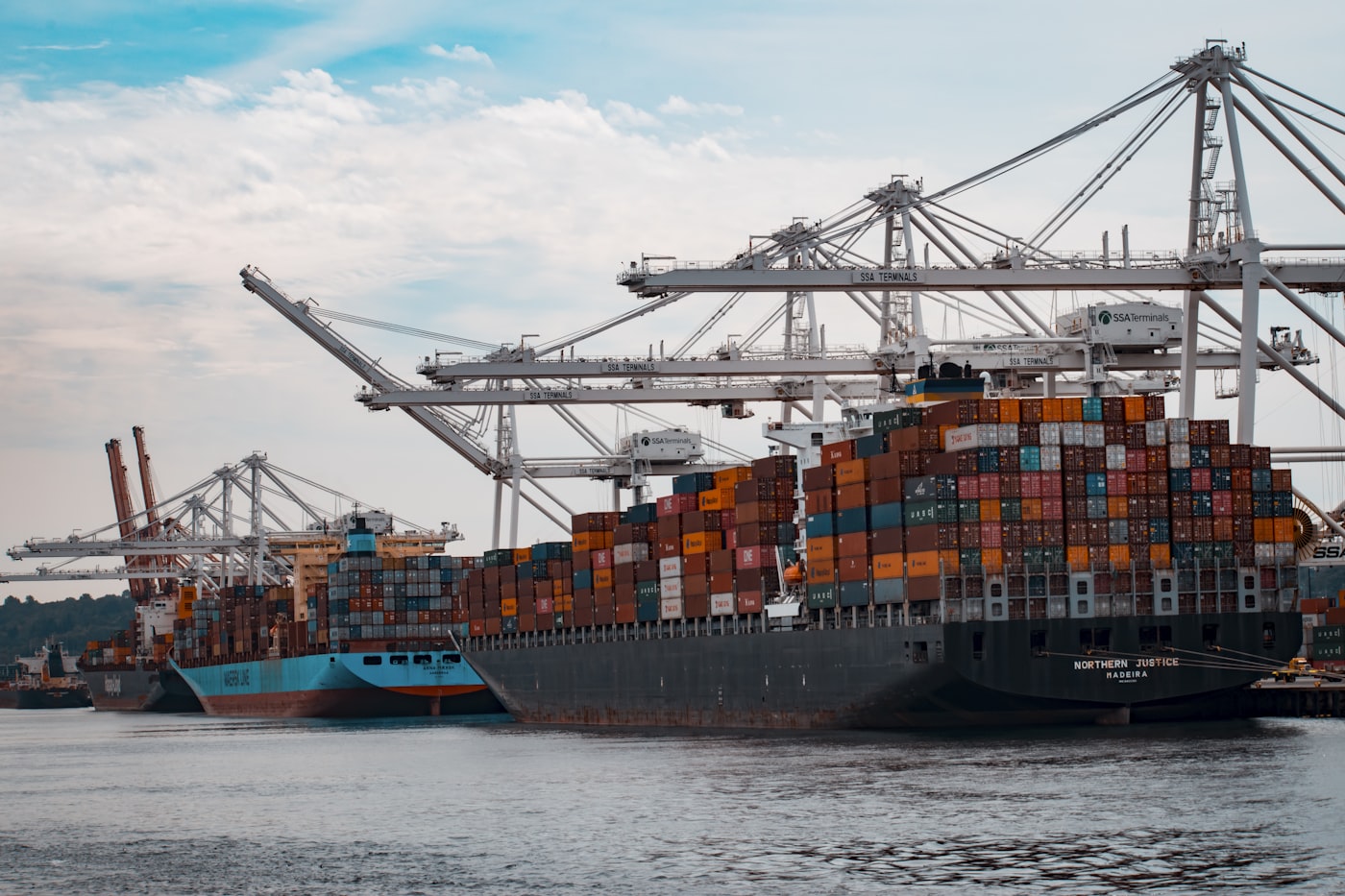
Illustrative stock image of port logistics — import, duty, and entry paperwork matter more than seat comfort. Photo: Unsplash.
Resale / policy risk and insurance–title red flags
Treat these as stop signs during or after the drive:
| Red flag | What it often means |
|---|---|
| Deposit required to “hold” after a 10-minute drive | High-pressure sales, not education |
| VIN withheld | You cannot insure or research the car |
| “Title later” / “bonded title easy” | You may buy a paperwork fight |
| Cash-only + no bill of sale template | Exit and insurance pain ahead |
| Seller cannot name a US insurer who has bound similar cars | You may be uninsurable at a sane price |
| “Canada dealers will sort US registration” | Jurisdiction confusion; verify independently |
| Software features demoed on foreign firmware | US-connected functionality may differ or face policy limits |
Insurance script (run before any deposit)
Call your insurer or a broker with:
- year / make / model / market
- VIN if known
- intended garaging ZIP
Ask: Will you bind a standard personal auto policy? Any surcharge? Preferred shops? If they hesitate, the test drive’s “wow” is irrelevant.
Title script
Ask your state DMV (or a specialist attorney — FairRange is not one) whether that market’s documentation can title in your state. NHTSA conformity and state title are related but not identical problems.
When NOT to test-drive as a purchase path
Skip or strictly demote the drive when:
- You cannot delay purchase — you need a US-legal car this month; spend time on authorized inventory instead
- The only available car is gray-market and you have not cleared insurance/title
- The trip to Canada/Europe exists mainly because US retail for China-brand passenger EVs is absent — curiosity is fine; converting curiosity into a rushed import is not
- You feel social pressure from a friend who “already put a deposit down”
A test drive is research. A purchase path needs compliance. Do not merge them under adrenaline.
Practical checklists by scenario
A) Overseas trip (Europe / Asia)
- Drive for product feel only
- Photograph window sticker / tire placard / charge port
- Do not wire deposits to “reserve US allocation” without independent counsel
- Compare notes later against US-legal EVs you can actually buy
B) Canada shopping tourism
- Read Canada headlines (including USA Today’s BYD trade coverage) as industrial news, not inventory guarantees
- Ask whether the car is even for sale to non-residents
- Separate “I liked the drive” from “I can import and insure this.”
- Budget time for NHTSA + CBP + state DMV — not a Sunday afternoon
C) Gray-market pitch inside the US
- Assume higher fraud and compliance risk until paperwork proves otherwise
- Bring a second person; do not carry large cash
- Record answers about importer, duties, and warranty entity
- Walk if any red flag table row trips
Verdict
| Scenario | Test-drive value | Purchase-path value |
|---|---|---|
| Authorized US retail China-brand passenger EV | High — if/when it exists | High |
| Overseas brand drive while traveling | Medium (product feel) | Low for US daily driver |
| Canada tourism drive after trade headlines | Medium (curiosity) | Low unless full import plan exists |
| Gray-market US pitch | Low–medium (inspect carefully) | Often poor |
| Skip drive; buy US-legal EV now | N/A | Often best for commute risk |
Bottom line: You can learn a lot from a Chinese EV test drive abroad or under a specialty pitch. You get sold when seat comfort replaces NHTSA, CBP, insurance, and title diligence. As of August 2026, authorized US retail for China-brand passenger EVs is generally absent — so treat most drives as education, not a checkout funnel.
Sources
- NHTSA — importing a vehicle: https://www.nhtsa.gov/importing-vehicle
- CBP — US Customs and Border Protection: https://www.cbp.gov/
- US Department of Commerce — connected vehicles / ICTS ANPRM press release: https://www.commerce.gov/news/press-releases/2024/02/citing-national-security-concerns-biden-harris-administration-announces
- USA Today — BYD / Canada trade reporting: https://www.usatoday.com/story/cars/news/2026/01/20/byd-trade-deal-canada/88217293007/
- USTR — Section 301 modifications determination (EV duties): https://ustr.gov/sites/default/files/Section%20301%20Modifications%20Determination%20FRN%20%28Sept%2012%202024%29%20%28FINAL%29.pdf
Not legal, tax, or financial advice.
FAQ
Is a Canada or Europe test drive a valid US purchase path?
It can be useful product research. It is not, by itself, a path to a US-titled, insured daily driver. NHTSA conformity, CBP entry, insurance binding, and state title rules decide that — not how the car felt on a smooth highway abroad.
When should I refuse a test drive entirely?
Refuse when the seller ties the drive to a deposit, refuses VIN disclosure, promises “title later,” pressures cash-only without paperwork, or cannot explain how the car becomes US-legal for your state. A drive is not worth a rushed contract.
Are Chinese passenger EVs banned from US roads?
FairRange avoids cartoon “ban” language. The practical barrier is a stack of tariffs, certification, commercial strategy, and connected-vehicle policy attention. Outcome for shoppers: authorized retail for China-brand passenger EVs is generally absent as of August 2026.
Editorial opinion for research only. Not financial, legal, or purchase advice. Last verified 2026-08-30.